

Concerns and Recommendations of Civil Society Organizations Regarding Discriminatory State Policies Against Muslims in France
Concerns and Recommendations of Civil Society Organizations Regarding Discriminatory State Policies Against Muslims in France
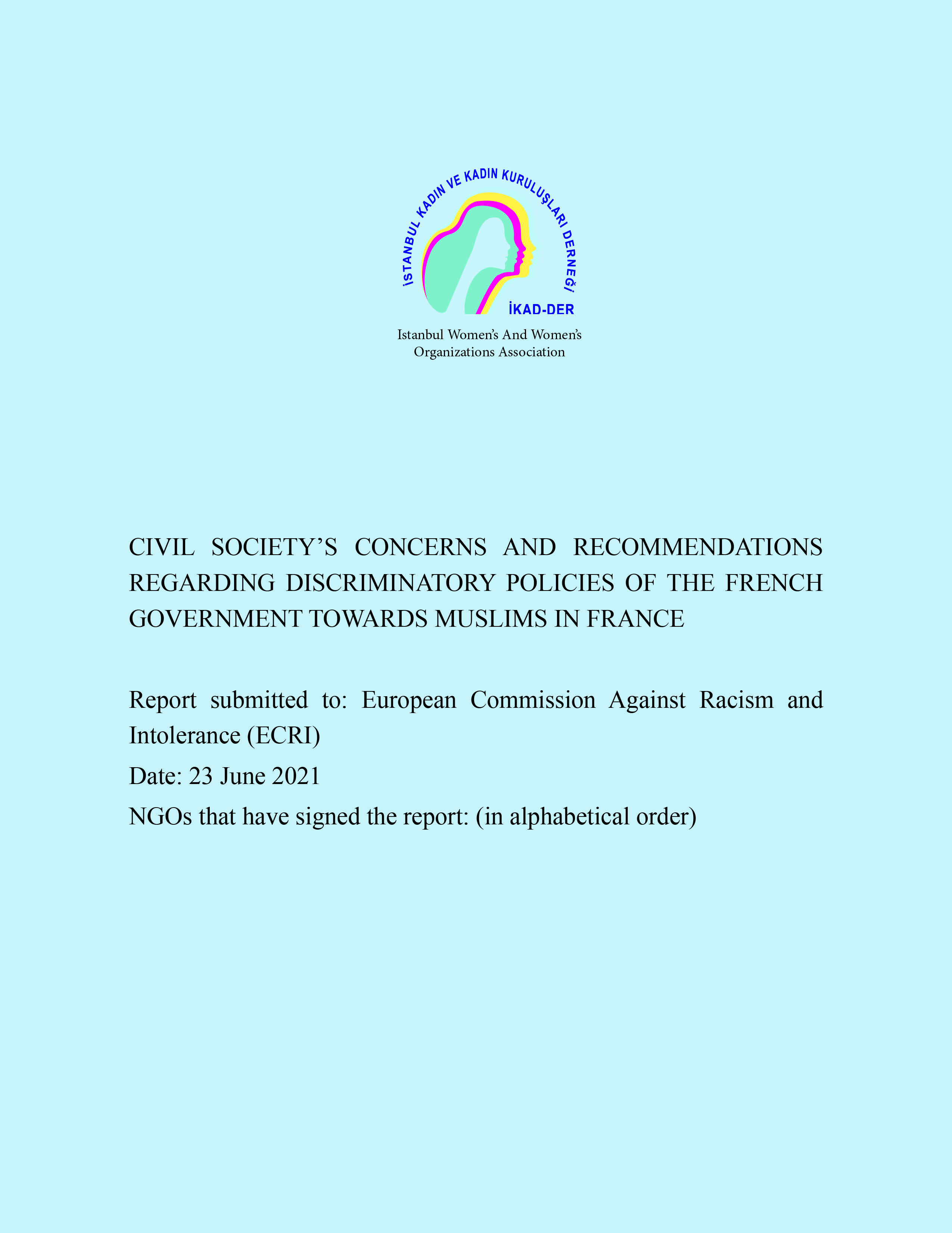
Civil society organizations' concerns and recommendations regarding discriminatory state policies against Muslims in France have been submitted to the European Commission against Racism and Intolerance (ECRI) of the Council of Europe in a report.
In a speech on October 2, 2020, French President Emmanuel Macron stated that "Islam is experiencing a crisis everywhere in the world," and added that "Islam needs to be structured in France so that it can be a partner of the republic." Prior to and following this speech, the closure of Muslim places of worship, schools, and associations, the Interior Minister's statement regarding the removal of halal food sections, attacks on mosques, cases of violence against veiled parents on school trips, and many other incidents demonstrate that discrimination against Muslims has moved beyond isolated cases and is becoming normalized, used as political fodder, and widespread in society. Article 14 of the European Convention on Human Rights, concerning the prohibition of discrimination, states that "The enjoyment of the rights and freedoms recognized in this Convention shall be secured without discrimination on any ground such as sex, race, colour, language, religion, political or other opinion, national or social origin, membership of a national minority, property, birth or any other status." The European Commission against Racism and Intolerance (ECRI), an organ of the Council of Europe, issued General Policy Recommendation No. 5 in 2000, outlining various measures to be taken by states with Muslim minorities regarding the intolerance and discrimination faced by Muslims. In its 4th Monitoring Period Report, concluded in 2010, ECRI addressed the situation of Muslims in France as a "vulnerable/target group," specifically warning the French government to pay attention to their plight. However, far from improvements, discriminatory and racist policies have become even more widespread since then. Civil society organizations from different countries around the world, watching these developments with concern, have prepared a report signed by 73 NGOs and submitted it to the European Commission against Racism and Intolerance (ECRI) of the Council of Europe, in order to present an assessment of France's racist and discriminatory policies within the framework of human rights, equality, democratic values and the rule of law.